

Fresh industries and services news from South Dakota
Provided by AGP
Historical DNA connects 1.3 million living relatives to 17th-century Maryland settlers and may have identified the colony’s second governor
Analysis of Historic St. Mary’s City highlights the power of combining ancient DNA, archaeology, and genealogy to restore lost identities and track the migrations of America's earliest English colonists and their descendants
At a Glance:
- DNA analysis of 49 colonists from 17th-century St. Mary’s City reveals over 1.3 million living genetic relatives of Maryland’s founding settlers.
- Researchers used DNA to trace the migration of St. Mary’s colonists from Great Britain and Ireland to Maryland, and subsequent migrations of their descendants across the United States, including a wave of migration of Maryland Catholics to Kentucky following the Revolutionary War.
- The study uses a novel framework that combines genetic and genealogical information to propose possible identities for previously unknown individuals buried in Historic St. Mary’s City’s Chapel Field cemetery, leading to the possible identification of Maryland’s second governor, Thomas Greene (1609–1651).
PALO ALTO, Calif., May 14, 2026 (GLOBE NEWSWIRE) -- As the United States prepares to mark its 250th anniversary, researchers from 23andMe Research Institute, Harvard University, and the Smithsonian Institution have teamed up to study one of the country’s founding settlements: St. Mary’s City, Maryland.
Established in 1634, St. Mary’s City was the first English settlement in the colony of Maryland. Despite existing written records and the ability of many present-day Americans to trace their ancestry to the historic city, many gaps remain in our knowledge of this early founder population.
Published in Current Biology, the study focuses on the genetic ancestry of 49 colonists who were buried in St. Mary’s City’s Chapel Field cemetery between 1634–1730.
By studying their DNA, the research team learned about the ancestral origins of this founding population and traced the migration of their descendants across the United States. Using a novel approach that combines genetic connections to research participants in the 23andMe database with self-reported family history information, they even propose possible identities for three previously unknown individuals buried in the cemetery, including Maryland's second governor, Thomas Greene.
“This work highlights the power of ancient DNA analyses to fill in gaps in the historical record,” said co-senior author David Reich, professor of genetics in the Blavatnik Institute at Harvard Medical School and professor of human evolutionary biology in Harvard’s FAS. “While written records are extraordinarily rich, genetic data can still address gaps in that record and yield surprises.”
Expanding the Calvert Family
"This project has been decades in the making, starting with the excavation of three rare lead coffins from the Brick Chapel," said Douglas Owsley, curator of biological anthropology at the Smithsonian’s National Museum of Natural History. "Years of interdisciplinary research eventually led us to team up with Harvard for DNA analysis, which became the springboard for these incredible new genetic discoveries."
The lead coffins contained the remains of Philip Calvert, his first wife, Anne Wolseley Calvert, and an infant son, who the genetic analysis revealed to be the son of Calvert and his second wife, Jane Sewell. The results of this genetic analysis were released in 2016 as part of a technical report, but are formally published for the first time in this study.
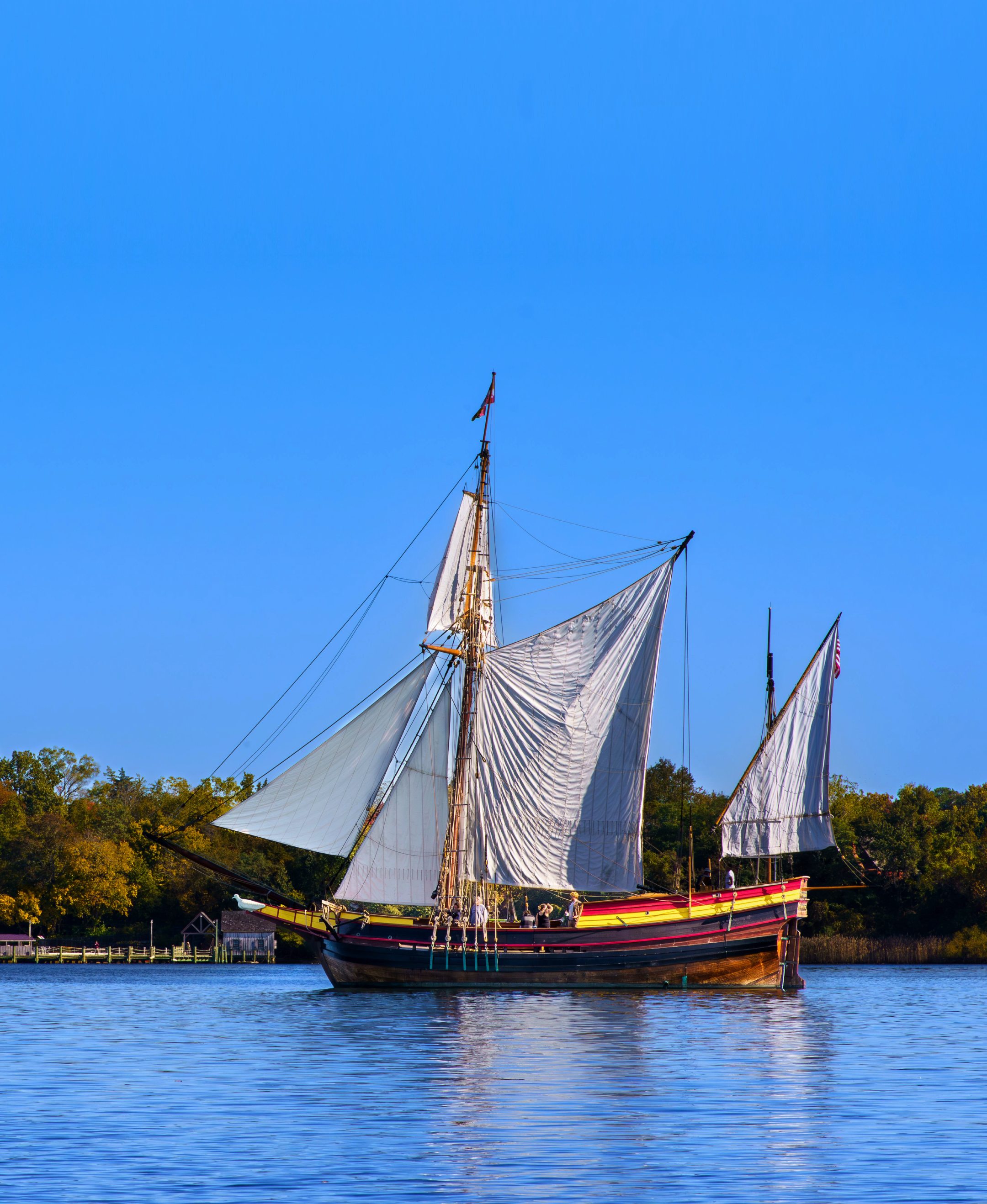
Philip Calvert, who served as the colony’s fifth governor, was the youngest son of George Calvert, England’s first Baron Baltimore. The prominent Calvert family played a critical role in the founding of the colony of Maryland. The colony was first envisioned by George Calvert as an expansion of the King's realm and a place of religious freedom, especially for persecuted Catholics. The royal charter for the new colony was granted shortly after his death. In 1633, the first settlers set sail for Maryland aboard the ships The Ark and The Dove, led by George’s son Leonard Calvert. The travelers arrived at Maryland’s southern tip in 1634, where they founded St. Mary’s City. While many members of the Calvert family are known to have traveled to St. Mary’s City, only Philip’s burial location has been identified.
When comparing the DNA of Philip Calvert and his wife and son to the 46 other individuals included in this analysis, the research team identified three additional members of the Calvert family.
“Although additional work is needed to determine exactly how these individuals were related to Philip, this finding is significant given that several members of the extended Calvert family, including Philip’s half-brothers Leonard (1610–1647) and George (1613–1634), died in St. Mary’s during this period,” said Owsley.
The DNA study also identified related individuals belonging to five additional families buried at the site, including one that spanned three generations. “Because mortality was so high in the early days of the colony, finding a multigenerational family was a surprise,” Owsley added. “It’s a discovery that simply wouldn’t have been possible without genetic study.”
DNA helps trace historic migrations
By studying patterns of genetic sharing between the St. Mary’s individuals and over 11.5 million research participants in the 23andMe genetic database, the researchers were able to identify the likely places of origin for many of the colonial city’s earliest inhabitants. The majority of these individuals share the strongest connection with participants from Great Britain, particularly in western England and Wales, while several appear genetically Irish.
Further, by examining patterns of sharing across the United States, they discovered a strong genetic signal that mirrored a documented migration of Catholics from Maryland to Kentucky that primarily occurred between 1780–1820, driven by economic pressures and anti-Catholic bias in Maryland.
"Detecting such a clear genetic signal of this documented historical migration to Kentucky highlights the power of our approach,” said Éadaoin Harney, Senior Scientist, Population Genetics Research and Development at 23andMe Research Institute.
Possible identification of the colony of Maryland’s second governor, Thomas Greene (1609–1651)
By focusing on research participants who shared the strongest genetic connections to the St. Mary’s individuals, and inviting them to share details of their family histories, the research team tackled a novel problem: identifying otherwise unknown individuals by harnessing their genetic connections to living people.
Focusing on the burials of three related individuals identified at the site, researchers collected genealogical information from study participants who shared the strongest genetic connections to these individuals. By searching for overlaps in their family trees and integrating other anthropological information, the research team concluded that the most probable candidates for the identities of these individuals are Governor Thomas Greene, second governor of the colony of Maryland, his first wife Anne, and their son, Leonard.
“This is the first time that ancient DNA has been used to help identify unknown individuals, without any prior knowledge of who they might have been. And it just so happens that one of those individuals turned out to be one of colonial Maryland’s most prominent figures,” said Harney.
“We didn’t go into this study searching for Thomas Greene, but when the genetics team brought this name to me, it was remarkable how well the historical and archaeological records supported this potential identification,” said Henry Miller, Senior Research Fellow at Historic St. Mary’s City. “There is more work to be done to confirm his identity, but this genetic analysis was the key we needed to unlock this finding.”
“The possibilities that this kind of approach holds for enabling future reidentifications of historical individuals are truly exciting,” said Reich.
Honoring America's 250th Anniversary through DNA
As the United States approaches its 250th anniversary, this research underscores the enduring connections between the nation's earliest European settlers and millions of living Americans. The project relied not just on cutting-edge science, but on the active support of the early Maryland descendant community, including those who trace their lineage to the original Ark and Dove voyage.
"Community collaboration is at the heart of this work," concluded Miller. "The descendant community has championed this research from the beginning, and this genetic analysis allows us to directly link our archaeological findings with the living people who represent that enduring legacy today. It is incredibly meaningful as we reflect on the founding of our country."
A Media Snippet accompanying this announcement is available by clicking on this link.
Authorship, Funding, and Disclosures
Reich and Owsley are co-senior authors with Joanna Mountain, formerly of 23andMe. Reich is an investigator at the Howard Hughes Medical Institute. First author Harney led the study.
Additional authors are Ethan Jewett, Steven Micheletti, Roslyn Curry, Karin S. Bruwelheide, William A. Freyman, Henry Miller, Ali Akbari, Kathryn Barca, Katarzyna Bryc, Shaeloren Deering, Samantha Ancona Esselmann, Kira Kalkus, Aisling Kearns, Alexander Moran, Dominique T. Nguyen, Iñigo Olalde, Jakob Sedig, Kendra Sirak, Kim Callan, Lora Iliev, Lijun Qiu, J. Noah Workman, Matthew Mah, Gregory Soos, 23andMe Research Team, Swapan Mallick, Nadin Rohland
The ancient DNA analysis was funded by NIH grant HG012287; by John Templeton Foundation grant 61220; by a gift from Jean-François Clin; by the Allen Discovery Center program, a Paul G. Allen Frontiers Group advised program of the Allen Family Philanthropies; and by the Howard Hughes Medical Institute. The pedigree analyses were funded in part by NIH grant R35GM133805. The Rice Family Endowment for Forensic Anthropology and The Kathryn Nell Harrison Foundation provided critical support for Smithsonian Skeletal Biology Program contributions.
About 23andMe Research Institute
23andMe Research Institute is a new nonprofit 501(c)(3) medical research organization that enables people everywhere to access their genetic information, learn about themselves and participate in large-scale research for public good. The Institute unites people with the common goal of improving health and deepening our understanding of DNA, the code of life.
About Harvard Medical School
At Harvard Medical School, our mission is to create and nurture a diverse community of the best people committed to leadership in alleviating human suffering caused by disease. With our vast reservoir of talent, extensive network of affiliates and commitment to problem solving, Harvard Medical School is uniquely positioned to steer education and research in directions that will benefit local, national, and global communities.
About Smithsonian Institution’s National Museum of Natural History
The National Museum of Natural History is connecting people everywhere with Earth’s unfolding story. It is one of the most visited natural history museums in the world. Opened in 1910, the museum is dedicated to maintaining and preserving the world’s most extensive collection of natural history specimens and human artifacts.
Contact:
Catherine Afarian
Phone: 408-656-8872
Email: catherine.afarian@23andMe.com


Legal Disclaimer:
EIN Presswire provides this news content "as is" without warranty of any kind. We do not accept any responsibility or liability for the accuracy, content, images, videos, licenses, completeness, legality, or reliability of the information contained in this article. If you have any complaints or copyright issues related to this article, kindly contact the author above.
